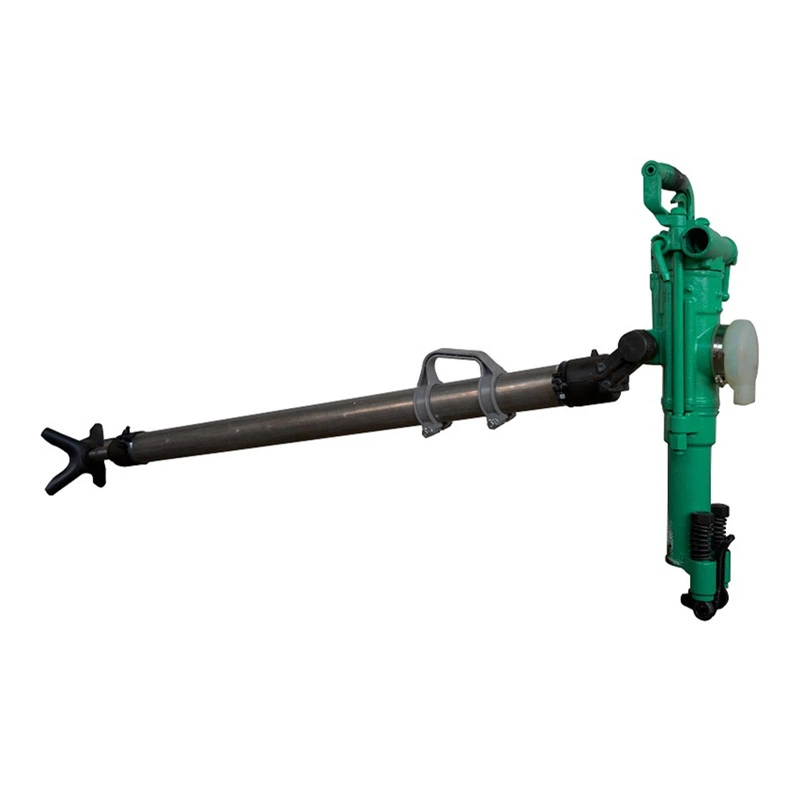
A pusher leg rock drill, a vital tool in the mining and construction industries, is designed to bore holes in hard rock surfaces efficiently. As a leading supplier of pusher leg rock drills, I am delighted to share insights into its working principle, which will not only enhance your understanding of this remarkable equipment but also help you make informed decisions when considering a purchase.
Basic Components of a Pusher Leg Rock Drill
Before delving into the working principle, it's essential to understand the key components of a pusher leg rock drill. These components work in harmony to achieve the desired drilling effect.
- Drill Bit: The drill bit is the part that comes into direct contact with the rock. It is typically made of high - strength materials such as tungsten carbide, which can withstand the high pressure and abrasion during the drilling process. Different types of drill bits are available, each designed for specific rock types and drilling requirements.
- Piston: The piston is a crucial part of the drill's power mechanism. It moves back and forth within the cylinder, generating the impact force needed to break the rock. The movement of the piston is driven by compressed air, which is supplied to the drill.
- Cylinder: The cylinder provides a housing for the piston. It is designed to ensure smooth movement of the piston and to maintain the proper pressure for the operation.
- Pusher Leg: The pusher leg is used to support the drill and apply the necessary thrust force against the rock surface. It can be adjusted in length and angle to suit different drilling positions and conditions.
Working Principle of a Pusher Leg Rock Drill
The working principle of a pusher leg rock drill is based on the combination of impact and rotation. Here is a step - by - step breakdown of the process:
1. Compressed Air Supply
The process starts with the supply of compressed air. Compressed air is a common power source for pusher leg rock drills due to its reliability and efficiency. The compressed air is typically provided by an air compressor, which can be either stationary or mobile, depending on the application.
The air compressor pumps high - pressure air through a hose to the rock drill. The air enters the drill through an intake valve, which controls the flow of air into the drill.
2. Piston Movement
Once the compressed air enters the drill, it acts on the piston. The pressure of the air forces the piston to move forward rapidly. As the piston moves forward, it strikes the shank adapter, which is connected to the drill bit. This impact generates a powerful force that is transferred to the drill bit, causing it to break the rock.
After the impact, the compressed air is redirected to the back of the piston, creating a pressure difference that forces the piston to move backward. This backward movement resets the piston for the next impact cycle. The piston moves back and forth at a high frequency, typically several hundred times per minute, depending on the design of the drill.
3. Rotation of the Drill Bit
In addition to the impact force, the drill bit also rotates during the drilling process. The rotation mechanism is usually driven by the same compressed air source. The compressed air is used to power a small motor or a gear system that rotates the drill bit. The rotation of the drill bit helps to create a circular hole in the rock and to chip away the debris generated by the impact.
The rotation speed of the drill bit can be adjusted according to the type of rock and the drilling requirements. For softer rocks, a higher rotation speed may be used, while for harder rocks, a lower rotation speed combined with a higher impact force may be more effective.
4. Thrust Force Application
The pusher leg plays a crucial role in applying the necessary thrust force against the rock surface. The operator can adjust the length and angle of the pusher leg to position the drill correctly and to apply the appropriate amount of force. The thrust force helps to keep the drill bit in contact with the rock and to ensure efficient drilling.
As the drill bit breaks the rock, the debris is removed from the hole by the air flow. The compressed air also cools the drill bit, preventing it from overheating and prolonging its lifespan.
Advantages of Pusher Leg Rock Drills
Pusher leg rock drills offer several advantages over other types of rock drills, which makes them a popular choice in many applications.
- Portability: Pusher leg rock drills are relatively lightweight and easy to move around. This makes them suitable for use in various locations, including mines, construction sites, and quarries. They can be easily transported to different drilling positions, reducing the need for large and expensive equipment.
- Versatility: These drills can be used for a wide range of applications, from small - scale drilling to large - scale mining operations. They can drill holes in different types of rocks, including granite, limestone, and sandstone.
- Cost - effectiveness: Pusher leg rock drills are generally more cost - effective than other types of rock drills. They have lower initial purchase costs and require less maintenance, which can result in significant savings over the long term.
Applications of Pusher Leg Rock Drills
Pusher leg rock drills are widely used in the following industries:
- Mining: In the mining industry, pusher leg rock drills are used for various tasks, such as exploration drilling, production drilling, and blasting hole drilling. They can help miners access valuable minerals and ores deep underground.
- Construction: In the construction industry, these drills are used for tasks such as foundation drilling, rock excavation, and tunneling. They can be used to create holes for anchor bolts, piles, and other structural components.
- Quarrying: In the quarrying industry, pusher leg rock drills are used to extract stone and other aggregates from quarries. They can be used to drill holes for explosives, which are then used to break the rock into smaller pieces for further processing.
Related Products
If you are interested in other types of rock drilling equipment, we also offer a range of products, including Portable Rock Drilling Machine, Underground Rock Drill, and Mini Borehole Drilling Machine. These products are designed to meet different customer needs and can provide efficient and reliable drilling solutions.
Contact for Purchase and Negotiation
If you are in the market for a pusher leg rock drill or any of our other products, we encourage you to contact us for purchase and negotiation. Our team of experts is ready to provide you with detailed product information, technical support, and competitive pricing. We are committed to providing high - quality products and excellent customer service to help you achieve your drilling goals.

References
- "Rock Drilling Handbook", published by Epiroc, a leading manufacturer in the rock drilling industry.
- "Mining Engineering Principles and Practices", a comprehensive book that covers various aspects of the mining industry, including rock drilling techniques.