Torque is a fundamental concept when it comes to understanding the performance and capabilities of a rock drill. As a reputable rock drill supplier, I am often asked about the significance of torque in rock drills. In this blog post, I will delve into what torque is, its importance in rock drills, and how it affects the overall operation and efficiency of these powerful tools.

What is Torque?
Torque, in simple terms, is a measure of the force that can cause an object to rotate around an axis. It is often described as a twisting or turning force. In the context of a rock drill, torque is the rotational force that the drill bit exerts on the rock. This force is crucial for breaking through hard rock formations and creating holes of various sizes and depths.
Mathematically, torque (τ) is calculated as the product of the force (F) applied perpendicular to the axis of rotation and the distance (r) from the axis of rotation to the point where the force is applied. The formula for torque is τ = F × r. The unit of torque is the newton - meter (N·m) in the International System of Units (SI).
Importance of Torque in Rock Drills
Drilling Performance
The torque of a rock drill directly impacts its drilling performance. A higher torque allows the drill bit to penetrate harder rock more effectively. When the drill bit encounters a hard rock formation, it needs sufficient torque to overcome the resistance of the rock and continue drilling. If the torque is too low, the drill bit may get stuck or fail to make progress, leading to inefficient drilling and increased wear on the drill bit.
For example, in mining operations where the rock is extremely hard, a rock drill with high torque is essential. It can quickly break through the rock, reducing the time and effort required for drilling. This not only increases productivity but also lowers the overall cost of the mining operation.
Hole Quality
Torque also plays a significant role in determining the quality of the holes drilled. A consistent and appropriate torque ensures that the drill bit rotates smoothly and evenly, resulting in clean and precise holes. If the torque is uneven or too low, the drill bit may wobble or deviate from the intended path, leading to irregular holes with rough edges. This can be a major problem in applications where the accuracy of the hole is critical, such as in construction projects for installing structural elements.
Drill Bit Life
Proper torque management can extend the life of the drill bit. When the torque is within the recommended range, the drill bit experiences less stress and wear. On the other hand, excessive torque can cause the drill bit to overheat and wear out quickly. By using a rock drill with the right torque for the specific rock type and drilling conditions, operators can reduce the frequency of drill bit replacements, saving both time and money.
Factors Affecting the Torque of a Rock Drill
Power Source
The power source of a rock drill has a significant impact on its torque output. There are different types of power sources used in rock drills, including pneumatic, hydraulic, and electric.
Pneumatic rock drills are powered by compressed air. They are known for their simplicity, reliability, and relatively low cost. However, the torque output of pneumatic rock drills is generally lower compared to hydraulic and electric drills. The torque of a pneumatic rock drill depends on the air pressure and flow rate supplied to the drill. Higher air pressure and flow rate can increase the torque, but there are limits to how much the air compressor can provide.
Hydraulic rock drills, on the other hand, are powered by hydraulic fluid. They can generate high torque levels, making them suitable for heavy - duty drilling applications. The torque of a hydraulic rock drill can be easily adjusted by controlling the hydraulic pressure and flow rate. This allows operators to optimize the torque according to the specific drilling requirements.
Electric rock drills are powered by electricity. They offer a good balance between torque and power efficiency. Electric drills can provide consistent torque output and are often used in applications where a clean and quiet operation is required, such as in indoor construction projects.
Drill Bit Design
The design of the drill bit also affects the torque required for drilling. Different types of drill bits are designed for specific rock types and drilling conditions. For example, a drill bit with a larger diameter generally requires more torque to rotate compared to a smaller - diameter drill bit. This is because the larger drill bit has a greater surface area in contact with the rock, resulting in more resistance.
The shape and geometry of the drill bit also play a role. A drill bit with a well - designed cutting edge can reduce the resistance and require less torque to penetrate the rock. For instance, some drill bits have a spiral or helical design that helps to remove the rock chips more efficiently, reducing the load on the drill bit and the required torque.
Rock Type
The type of rock being drilled is one of the most important factors affecting the torque requirements. Different rocks have different hardness, density, and fracture characteristics. Hard rocks, such as granite and basalt, require more torque to drill compared to softer rocks, such as limestone and sandstone.
In addition, the presence of fractures or joints in the rock can also affect the torque. If the rock has many fractures, the drill bit may encounter less resistance in some areas, but it may also require more torque to break through the intact rock between the fractures.
Torque in Different Types of Rock Drills
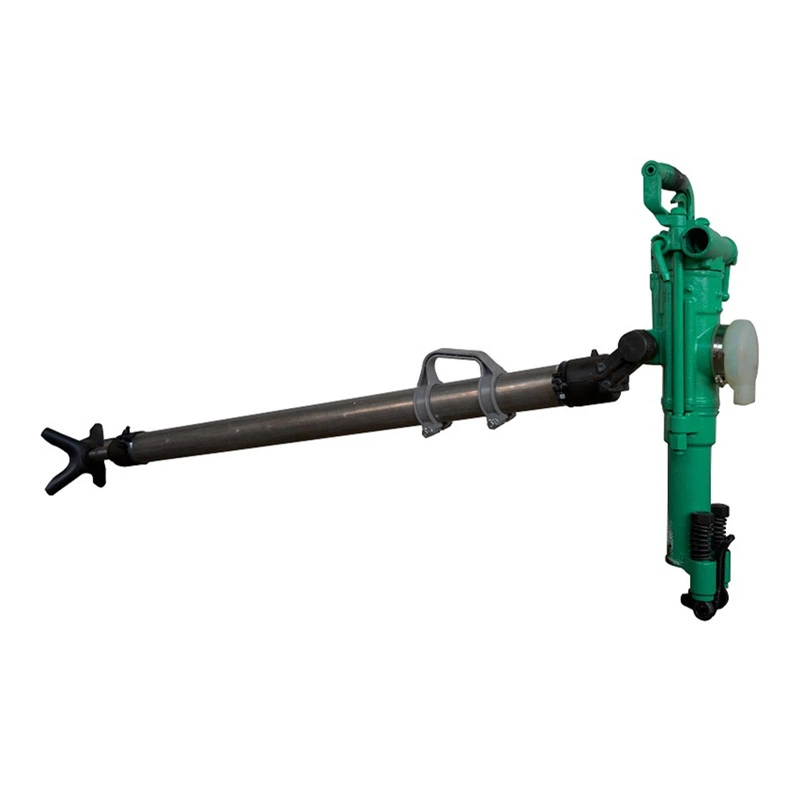
Pusher Leg Rock Drill
Pusher leg rock drills are handheld drills that are commonly used in small - scale mining, construction, and quarrying operations. They are relatively lightweight and easy to operate. The torque of a pusher leg rock drill is typically in the range of 10 - 50 N·m, depending on the model and power source. These drills are suitable for drilling holes in medium - hard rocks up to a certain depth.
Dth Pneumatic Rock Drill
Down - the - hole (Dth) pneumatic rock drills are used for deep - hole drilling in mining and geotechnical applications. They are designed to be inserted directly into the hole and use compressed air to drive the drill bit. Dth pneumatic rock drills can generate high torque levels, typically ranging from 100 - 500 N·m. This high torque allows them to drill deep holes in hard rock formations efficiently.
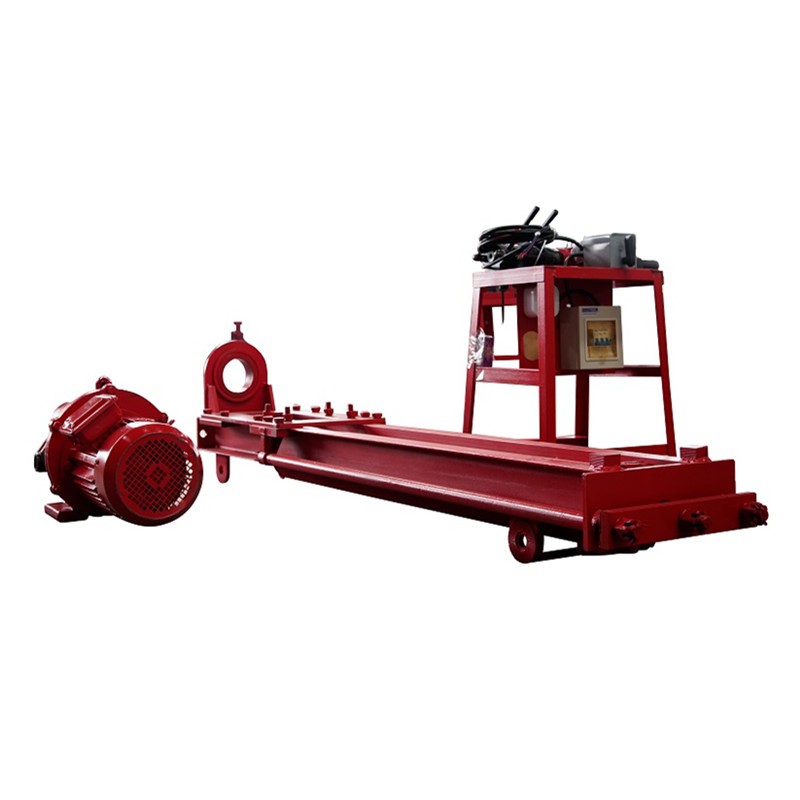
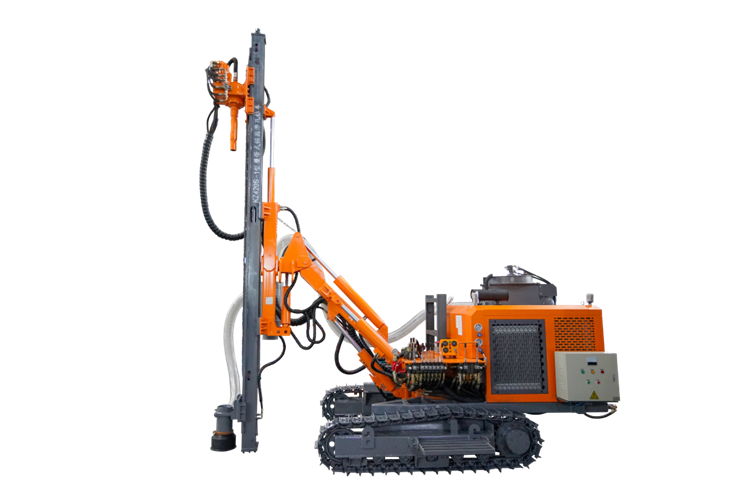
Pneumatic Drill Rig
Pneumatic drill rigs are larger and more powerful than handheld rock drills. They are often used in large - scale mining and construction projects. The torque of a pneumatic drill rig can vary widely depending on the size and configuration of the rig. Some pneumatic drill rigs can generate torque levels of over 1000 N·m, making them capable of drilling large - diameter holes in extremely hard rock.
Measuring and Adjusting Torque
Measuring the torque of a rock drill is essential for ensuring optimal performance. There are various methods and tools available for measuring torque. One common method is to use a torque wrench, which can be attached to the drill bit or the drill shaft to measure the torque directly. Another method is to use a torque sensor, which can be installed on the drill to continuously monitor the torque during operation.
Adjusting the torque of a rock drill depends on the type of power source and the design of the drill. In pneumatic rock drills, the torque can be adjusted by changing the air pressure and flow rate. In hydraulic rock drills, the torque can be adjusted by controlling the hydraulic pressure and flow rate. Electric rock drills may have adjustable settings or speed controls that can be used to adjust the torque.
Conclusion
In conclusion, the torque of a rock drill is a critical factor that affects its drilling performance, hole quality, and drill bit life. As a rock drill supplier, we understand the importance of providing rock drills with the appropriate torque for different applications. Whether you are involved in mining, construction, or any other industry that requires rock drilling, choosing a rock drill with the right torque is essential for achieving efficient and high - quality drilling results.
If you are interested in learning more about our rock drills or have specific requirements for your drilling project, please feel free to contact us for a detailed consultation. We are committed to providing you with the best rock drill solutions tailored to your needs.
References
- Budynas, R. G., & Nisbett, J. K. (2011). Shigley's Mechanical Engineering Design. McGraw - Hill.
- Popov, E. P. (1999). Engineering Mechanics of Solids. Prentice Hall.