The depth limit for mineral exploration drilling with a Pneumatic Crawler Drill is a crucial factor that influences the efficiency and effectiveness of mining operations. As a leading supplier of Pneumatic Crawler Drills, we understand the significance of this parameter and its impact on the overall exploration process. In this blog, we will delve into the factors that determine the depth limit of a Pneumatic Crawler Drill, the technology behind it, and how it compares to other drilling methods.
Factors Affecting the Depth Limit
Drill Rig Design and Specifications
The design and specifications of a Pneumatic Crawler Drill play a significant role in determining its depth limit. Our Pneumatic Crawler Drill is engineered with advanced features to ensure optimal performance at various depths. The power of the air compressor, the torque of the drill motor, and the strength of the drill rods all contribute to the drill's ability to penetrate deeper into the ground.
For instance, a drill with a high - powered air compressor can provide sufficient air pressure to remove cuttings from the borehole, preventing clogging and allowing for continuous drilling. Similarly, a drill motor with high torque can rotate the drill bit with enough force to break through hard rock formations. The drill rods must also be strong enough to withstand the axial and torsional forces exerted during drilling.
Rock Formation and Geology
The type of rock formation and geology of the exploration site are major factors affecting the depth limit. Different rock types have different strengths and hardness levels. For example, soft sedimentary rocks such as sandstone and shale are relatively easy to drill through, allowing the Pneumatic Crawler Drill to reach greater depths. In contrast, hard igneous rocks like granite and basalt pose more challenges.
The presence of fractures, faults, and other geological features can also impact drilling depth. Fractured rocks may cause the drill bit to deviate from the intended path or result in the loss of drilling fluid, which can limit the depth that can be achieved. Additionally, the in - situ stress conditions in the rock can affect the stability of the borehole, especially at greater depths.
Drilling Fluid and Cuttings Removal
Effective cuttings removal is essential for successful drilling, especially at greater depths. Pneumatic Crawler Drills use compressed air as the drilling fluid to carry the cuttings out of the borehole. The efficiency of cuttings removal depends on the air flow rate, the size and shape of the cuttings, and the diameter of the borehole.
If the cuttings are not removed properly, they can accumulate at the bottom of the borehole, increasing the friction between the drill bit and the rock, and reducing the drilling speed. In some cases, excessive cuttings accumulation can even cause the drill bit to get stuck, preventing further drilling. Therefore, maintaining an appropriate air flow rate and ensuring proper cuttings removal is crucial for reaching the maximum depth limit.
Technology Behind Pneumatic Crawler Drills
Pneumatic System
The pneumatic system is the heart of a Pneumatic Crawler Drill. It consists of an air compressor, air hoses, valves, and other components. The air compressor generates compressed air, which is then delivered to the drill bit through the air hoses. The compressed air not only powers the drill bit but also serves as the drilling fluid for cuttings removal.
Modern Pneumatic Crawler Drills are equipped with advanced air compressors that can produce high - pressure air with high efficiency. These compressors are designed to be reliable and durable, even in harsh mining environments. The valves in the pneumatic system are used to control the air flow rate and pressure, allowing for precise adjustment during drilling.

Crawler Mounting
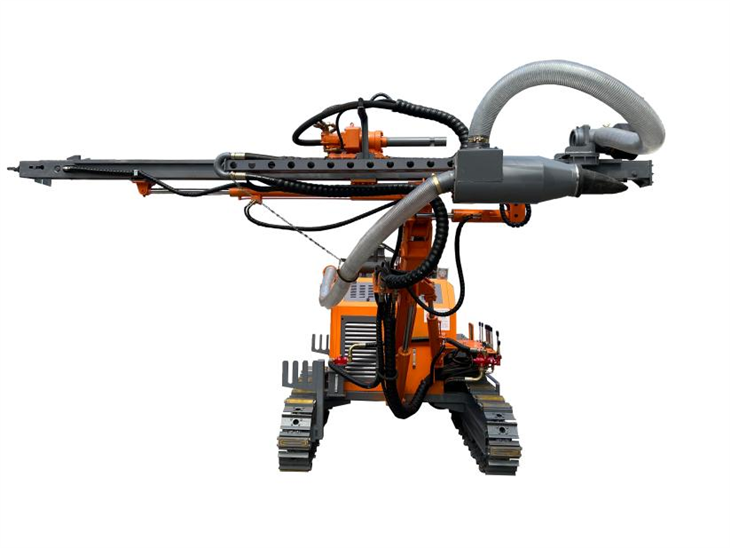
The crawler mounting of the drill provides excellent mobility and stability. Crawler tracks allow the drill to move easily across rough and uneven terrain, making it suitable for remote and challenging exploration sites. The crawler design also distributes the weight of the drill evenly, reducing the ground pressure and minimizing the risk of the drill sinking into soft ground.
Our Crawler Mounted Drill Rig and Drilling Rig Crawler are engineered to provide smooth and precise movement. The crawler drive system is powered by hydraulic motors, which offer high torque and efficient power transmission. This enables the drill to move quickly between drilling locations, increasing the overall productivity of the exploration operation.
Comparison with Other Drilling Methods
Rotary Drilling
Rotary drilling is another common method used in mineral exploration. Unlike Pneumatic Crawler Drills, rotary drills use a rotating drill bit to cut through the rock. Rotary drills can be used for both shallow and deep drilling, but they may require a different type of drilling fluid, such as water - based mud.
Pneumatic Crawler Drills have an advantage in dry or water - scarce environments, as they do not rely on water for drilling. They are also more suitable for drilling in soft to medium - hard rock formations. Rotary drills, on the other hand, may be more effective in very hard rock formations, but they often require more complex equipment and higher operating costs.
Core Drilling
Core drilling is used to obtain rock cores for geological analysis. It is a more precise but slower drilling method compared to Pneumatic Crawler Drills. Core drills use a hollow drill bit to extract cylindrical rock cores from the ground.
Pneumatic Crawler Drills are better suited for initial exploration to quickly assess the presence of minerals over a large area. They can cover more ground in a shorter time compared to core drilling. However, core drilling is essential for detailed geological studies and ore grade determination.
Depth Limits in Practice
In general, the depth limit for a Pneumatic Crawler Drill can range from a few meters to several hundred meters. In soft sedimentary rock formations, it is possible to reach depths of up to 300 - 400 meters. However, in hard igneous rock formations, the depth may be limited to 100 - 200 meters or less.
It is important to note that these are approximate values, and the actual depth limit can vary depending on the factors mentioned above. By carefully considering the rock formation, using the appropriate drill design, and ensuring proper drilling techniques, it is possible to maximize the depth that can be achieved with a Pneumatic Crawler Drill.
Conclusion and Call to Action
As a Pneumatic Crawler Drill supplier, we are committed to providing high - quality drilling equipment that can meet the diverse needs of mineral exploration projects. Our drills are designed with the latest technology and engineering expertise to ensure optimal performance and reliability.
If you are involved in mineral exploration and are looking for a reliable Pneumatic Crawler Drill, we invite you to contact us for more information. We can help you select the right drill for your specific project requirements and provide you with technical support and after - sales service. Whether you are exploring in a soft sedimentary rock area or a hard igneous rock site, our Pneumatic Crawler Drills can be a valuable asset in your exploration operations.
References
- "Mining Engineering Handbook" by Hartman, H. L.
- "Drilling and Blasting in Mines" by Singh, R. N. and Goel, R. K.
- Technical papers on Pneumatic Crawler Drills from industry conferences and research institutions.