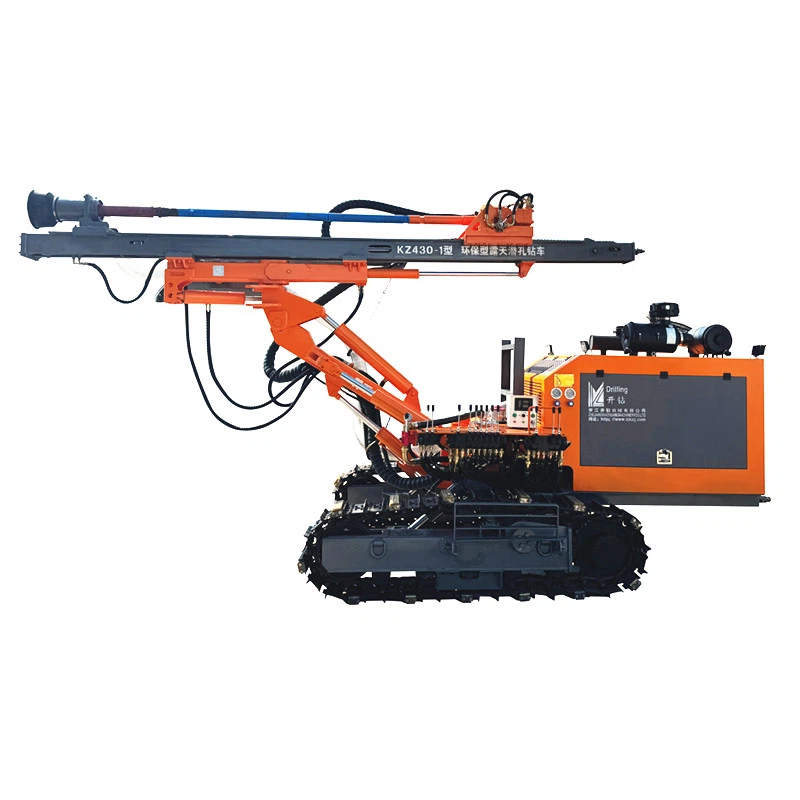
Two Core Technical Systems
Down-The-Hole Drill Rig Power and Actuation System:
Power Source: Diesel engine or electric motor, providing power for the entire machine.
Air Compression System: Screw or piston air compressor, supplying the high-pressure air required for impact and cuttings removal (typically 0.7-2.5 MPa).
Impact System: The core is the DTH (Down-The-Hole) hammer, which converts gas energy into mechanical impact energy.
Rotation and Feed System: Hydraulic motor or electric motor provides drill pipe rotation and feed/lift force.
Structural and Control System:
Structural System: Includes the mast (derrick) and crawler undercarriage (travel mechanism), providing stable support and guidance.
Control System: Integrated electro-hydraulic control for parameter adjustment (pressure, rotation speed); advanced models are equipped with intelligent systems for functions like automatic leveling, anti-jamming, and remote data transmission.
Understanding Three Categories of Key Components
Wear Parts: Require regular replacement and directly relate to operating costs.
Drill Bit: Should be replaced when carbide inserts are worn or missing.
Drill Pipe: Should be replaced if threads are worn, the pipe body is bent, or wall thickness reduction exceeds limits.
Seals (O-rings, oil seals): Should be replaced at regular intervals (e.g., every 500 hours) to prevent leaks.
Core Assemblies: High value, require in-depth maintenance.
DTH Hammer: Requires periodic inspection of piston clearance and replacement of internal valve sleeves and seals.
Power Head: Requires timely grease replenishment, gear oil changes, and internal seal replacement.
Structural and Travel Components:
Crawler Assembly: Inspect track shoes, carrier rollers, and sprockets for wear to prevent derailment.
Mast (Derrick): Check its straightness and hydraulic cylinders to ensure borehole vertical accuracy.
Four Core Application Scenarios
Mining: Drilling blast holes in open-pit mines, slope anchoring holes, and underground deep holes.
Infrastructure Construction: Drilling anchor cable holes for road/railway slopes, investigation holes for hydropower stations, and bridge pile foundation holes.
Geological and Energy Exploration: Hydrogeological holes, geothermal wells, and coalbed methane drainage holes.
Special Engineering: Polar/high-altitude drilling, underwater drilling, and emergency rescue channel drilling.
Key Points of Full Lifecycle Management
Selection and Economic Analysis: Select the machine model based on formation hardness, hole diameter/depth, and environmental requirements; calculate the "cost per meter drilled," and comprehensively evaluate equipment availability, fuel consumption, and maintenance costs.
Safe and Standardized Operation: Follow safety procedures, especially during slope operations and stuck pipe handling; monitor real-time parameters like hydraulic pressure and exhaust temperature.
Systematic Maintenance:
Daily: Check fluid levels, filters, and fasteners.
Periodic: Replace hydraulic oil and filters based on operating hours; inspect key clearances.
In-depth: Periodically disassemble and clean the hammer; inspect the engine and hydraulic pump condition.
Intelligence and Future Trends: IoT integration enables remote monitoring and predictive maintenance; electrification and hybridization reduce energy consumption and emissions; automation (e.g., automatic rod handling, hole locating) enhances efficiency and safety.