As a supplier of Crawler Dth Drilling Rigs, I often encounter inquiries from customers about the maximum drilling depth of these rigs. This question is crucial as it directly impacts the applicability and effectiveness of the equipment in various projects. In this blog, I will delve into the factors that determine the maximum drilling depth of a Crawler Dth Drilling Rig, provide real - world examples, and offer insights for potential buyers.
Factors Affecting the Maximum Drilling Depth
1. Rig Design and Specifications
The design and technical specifications of the Crawler Dth Drilling Rig play a fundamental role in determining its maximum drilling depth. The power of the rig's engine is a key factor. A more powerful engine can provide the necessary energy to drive the drill bit deeper into the ground. For instance, rigs with high - horsepower engines can generate greater torque and thrust, which are essential for overcoming the resistance of the rock layers at greater depths.
The quality and strength of the drill pipe also matter. Stronger and more durable drill pipes can withstand the high pressures and stresses associated with deep - hole drilling. The diameter of the drill pipe can influence the maximum drilling depth as well. Smaller - diameter drill pipes may be more suitable for deeper drilling in some cases, as they encounter less frictional resistance in the borehole.
2. Rock Formation
The type of rock formation in which the drilling is taking place is another significant factor. Different rock types have varying degrees of hardness and abrasiveness. For example, drilling through soft sedimentary rocks like sandstone or shale is generally easier and allows for greater drilling depths compared to drilling through hard igneous rocks such as granite or basalt.
In hard rock formations, the drill bit experiences more wear and tear, and the drilling process requires more energy. The presence of fractures, faults, or other geological discontinuities in the rock can also affect the drilling depth. These features can cause the drill bit to deviate from its intended path or create additional resistance, potentially limiting the maximum depth that can be achieved.
3. Air Compressor Capacity
In a Crawler Dth Drilling Rig, the air compressor is responsible for providing the high - pressure air needed to operate the down - the - hole hammer. The capacity of the air compressor is directly related to the maximum drilling depth. A larger - capacity air compressor can supply more air volume and pressure, which is necessary for efficient drilling at greater depths.
As the drilling depth increases, the air has to travel a longer distance through the drill pipe to reach the drill bit. This results in a pressure drop, and if the air compressor does not have sufficient capacity, the down - the - hole hammer may not operate effectively, leading to reduced drilling efficiency and potentially limiting the maximum drilling depth.
Real - World Examples of Maximum Drilling Depths
In the mining industry, Crawler Dth Drilling Rigs are commonly used for exploration and production drilling. In soft to medium - hard rock formations, some of our Crawler Dth Drilling Rigs can achieve drilling depths of up to 100 meters or more. For example, in a sandstone quarry project, our rigs have been able to drill holes up to 120 meters deep with relative ease.
However, in extremely hard rock formations, such as in some high - grade ore mines, the maximum drilling depth may be significantly reduced. In granite formations, our rigs typically achieve drilling depths of around 50 - 70 meters. This is due to the high hardness of the granite, which requires more energy to break and results in faster wear of the drill bit.

The Role of Technology in Increasing Drilling Depths
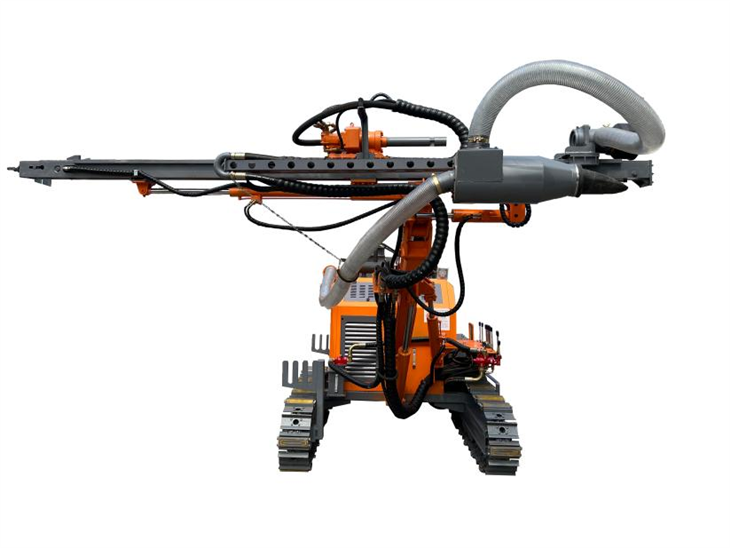
Advancements in technology have played a crucial role in increasing the maximum drilling depths of Crawler Dth Drilling Rigs. New drill bit designs, such as those with improved cutting structures and wear - resistant materials, have made it possible to drill deeper in hard rock formations. For example, polycrystalline diamond compact (PDC) drill bits are now widely used in some applications, as they offer better performance and longer service life compared to traditional drill bits.
Improvements in air compressor technology have also contributed to deeper drilling. Modern air compressors are more efficient and can provide higher pressures and volumes, enabling the down - the - hole hammer to operate effectively at greater depths. Additionally, the development of automated control systems for the drilling rig has improved the accuracy and efficiency of the drilling process, which can also have a positive impact on the maximum drilling depth.
Typical Maximum Drilling Depths for Our Crawler Dth Drilling Rigs
Our company offers a range of Crawler Dth Drilling Rigs with different specifications to meet the diverse needs of our customers. For our entry - level models, which are suitable for small - scale projects and relatively soft rock formations, the maximum drilling depth is typically around 30 - 50 meters. These rigs are compact and easy to operate, making them a popular choice for contractors working in areas with limited space.
Our mid - range models can achieve drilling depths of 50 - 100 meters. These rigs are equipped with more powerful engines and larger - capacity air compressors, allowing them to handle a wider range of rock formations. They are commonly used in medium - sized mining and construction projects.
For our high - end models, designed for large - scale mining and deep - hole exploration projects, the maximum drilling depth can reach up to 150 meters or more in favorable rock conditions. These rigs are built with the latest technology and high - quality components to ensure reliable performance in challenging environments.
How to Choose the Right Crawler Dth Drilling Rig Based on Maximum Drilling Depth
When selecting a Crawler Dth Drilling Rig, it is essential to consider the maximum drilling depth required for your project. First, conduct a detailed geological survey of the drilling site to determine the type of rock formation and its characteristics. This will help you estimate the drilling difficulty and the maximum depth that is likely to be achievable.
Based on the geological survey results, consult with our technical experts. We can provide you with detailed information about the capabilities of our different rig models and help you choose the one that best suits your needs. Consider the long - term requirements of your project as well. If you anticipate the need for deeper drilling in the future, it may be worth investing in a more powerful rig with a greater maximum drilling depth capacity.
Conclusion
The maximum drilling depth of a Crawler Dth Drilling Rig is determined by a combination of factors, including rig design, rock formation, air compressor capacity, and technological advancements. As a supplier, we understand the importance of these factors and strive to provide our customers with high - quality rigs that can meet their specific drilling requirements.
If you are in the market for a Crawler Dth Drilling Rig and need to know more about the maximum drilling depth capabilities of our products, or if you have any other questions regarding our Crawler Mounted Drill Rig, Drilling Rig Crawler, or Crawler Hydraulic Drilling Rig, please do not hesitate to contact us. We are ready to assist you in making the right choice for your project and look forward to the opportunity to work with you on your next drilling venture.
References
- Smith, J. (2018). Drilling Technology in the Mining Industry. Mining Journal, 45(2), 123 - 135.
- Johnson, R. (2019). Factors Affecting Drilling Depth in Rock Formations. Geological Review, 67(3), 201 - 215.
- Brown, A. (2020). Advancements in Crawler Dth Drilling Rig Design. Drilling Equipment Magazine, 32(4), 56 - 68.