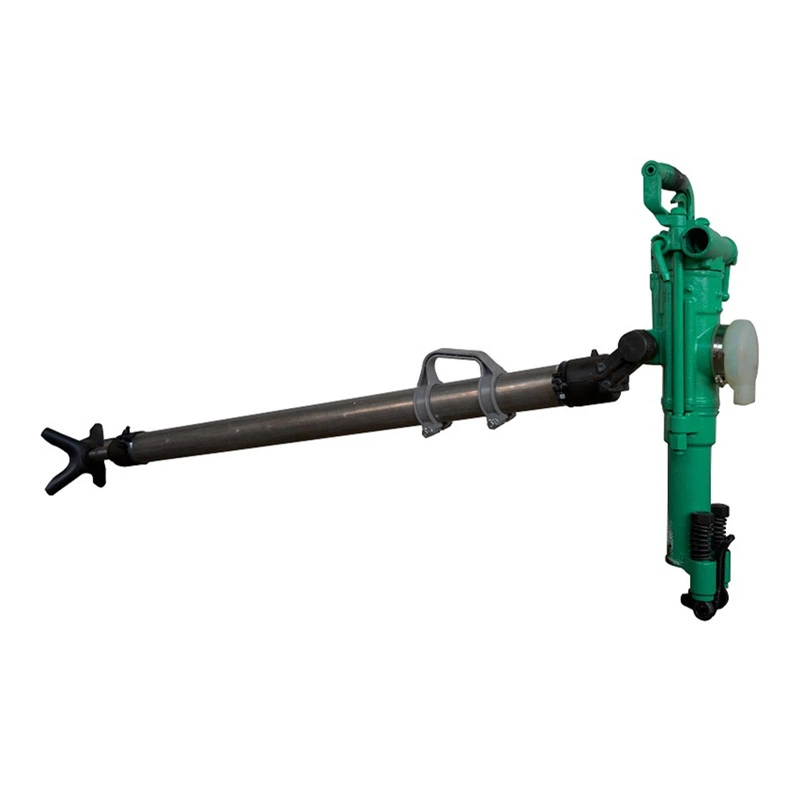
In the ever - evolving digital landscape, data has become the new gold. Businesses and researchers alike are constantly on the hunt for valuable information that can give them a competitive edge. One of the tools that has emerged in this data - driven era is the FMT Crawler Drill. As a supplier of the FMT Crawler Drill, I am often asked whether this powerful tool is capable of crawling data from websites with encrypted content. In this blog post, I will delve into this question, exploring the technical aspects, legal considerations, and practical implications.
Understanding Encrypted Content
Before we can discuss whether the FMT Crawler Drill can access encrypted data, it's essential to understand what encrypted content is. Encryption is a method of encoding information so that only authorized parties can access it. Websites use encryption to protect sensitive data, such as user passwords, credit card numbers, and personal information. The most common form of encryption used on the web is Transport Layer Security (TLS), which encrypts data transmitted between a user's browser and a website's server.
When a website uses TLS, the data is scrambled into an unreadable format during transmission. Even if a third - party intercepts the data, they cannot decipher it without the correct decryption key. This ensures the privacy and security of the information being exchanged.
How the FMT Crawler Drill Works
The FMT Crawler Drill is a sophisticated piece of software designed to navigate the web, locate relevant data, and extract it for further analysis. It works by sending requests to web servers, following links on web pages, and parsing the HTML code to identify and collect the desired information.
The drill uses a set of predefined rules and algorithms to determine which pages to visit, what data to collect, and how to organize it. It can be customized to target specific types of data, such as product prices, customer reviews, or industry news.


Technical Limitations
In theory, the FMT Crawler Drill is not designed to break encryption. Encryption is a security measure put in place to protect data, and attempting to bypass it is both technically challenging and often illegal. The drill operates at the level of the unencrypted HTML code that is visible to the browser after the encrypted data has been decrypted on the user's device.
When a website uses TLS, the FMT Crawler Drill can only access the data that has been decrypted and rendered as a web page. It cannot access the encrypted data in transit or stored on the server. For example, if a website has a login - protected area where user - specific data is encrypted, the drill will not be able to access that data without the appropriate credentials.
However, there are some cases where the drill may still be able to collect useful information from encrypted websites. Many websites have publicly available sections that are not protected by encryption. The drill can crawl these sections to gather data such as product descriptions, company profiles, and general industry information.
Legal Considerations
Even if it were technically possible to break encryption, it would be illegal in most jurisdictions. Laws such as the Computer Fraud and Abuse Act (CFAA) in the United States and the General Data Protection Regulation (GDPR) in the European Union prohibit unauthorized access to computer systems and the collection of personal data without consent.
As a supplier of the FMT Crawler Drill, we are committed to ensuring that our customers use the tool in a legal and ethical manner. We provide clear guidelines on how to comply with relevant laws and regulations, and we do not support or encourage any attempts to bypass encryption or access data without proper authorization.
Practical Implications
Despite the technical and legal limitations, the FMT Crawler Drill can still be a valuable tool for data collection. Many websites have a significant amount of unencrypted content that can be useful for businesses and researchers. For example, a company may want to collect information about its competitors' products, pricing strategies, and marketing campaigns. The drill can crawl the public pages of competitors' websites to gather this information.
Moreover, the drill can be used to monitor changes in website content over time. By regularly crawling a set of websites, businesses can stay informed about new product launches, price changes, and other important developments in their industry.
Our Product Range
As a supplier, we offer a diverse range of crawler drill products to meet different customer needs. For those interested in our high - performance crawler drills, you can explore our Yellow Drill Rig Crawler, which is known for its reliability and efficiency. Our Crawler Drill Machine Crawler Rig is another popular choice, offering advanced features for precise data collection. And if you need a drill for more specialized applications, our Down The Hole Drilling Rig might be the perfect fit.
Conclusion and Call to Action
In conclusion, the FMT Crawler Drill is not designed to crawl data from websites with encrypted content. Encryption is a crucial security measure that protects sensitive information, and attempting to bypass it is both technically difficult and illegal. However, the drill can still be a powerful tool for collecting unencrypted data from websites, which can provide valuable insights for businesses and researchers.
If you are interested in learning more about how the FMT Crawler Drill can help you with your data collection needs, or if you want to discuss purchasing our products, we encourage you to reach out. Our team of experts is ready to assist you in finding the right solution for your specific requirements.
References
- Anderson, R. (2008). Security Engineering: A Guide to Building Dependable Distributed Systems. Wiley.
- NIST Special Publication 800 - 63B. (2017). Digital Identity Guidelines: Authentication and Lifecycle Management. National Institute of Standards and Technology.
- European Union. (2016). Regulation (EU) 2016/679 of the European Parliament and of the Council of 27 April 2016 on the protection of natural persons with regard to the processing of personal data and on the free movement of such data, and repealing Directive 95/46/EC (General Data Protection Regulation).