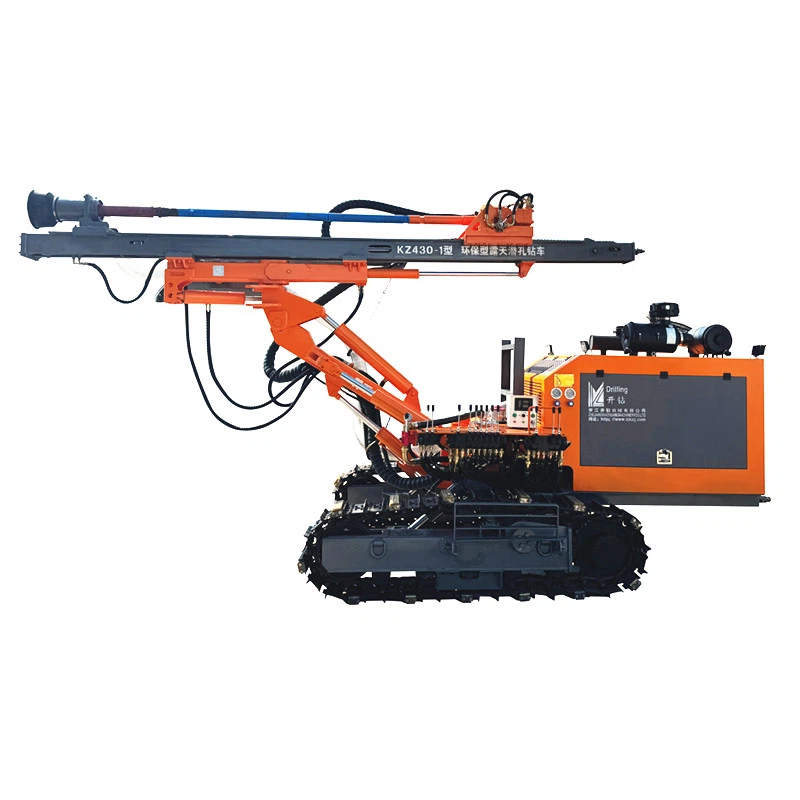
Rock drills work according to the principle of impact crushing. During operation, the piston undergoes high-frequency reciprocating motion, continuously impacting the drill tail. Under the action of impact force, the wedge-shaped drill bit crushes the rock and chisels it into a certain depth, forming a dent. After the piston retracts, the drill bit rotates a certain angle, and the piston moves forward. When it impacts the drill tail again, a new indentation is formed. The fan-shaped rock block between the two indentations is sheared by the horizontal force generated on the drill bit. The piston continuously impacts the tail of the drill and continuously inputs compressed air or pressurized water from the center hole of the drill, discharging the rock debris outside the hole, thus forming a circular borehole of a certain depth.