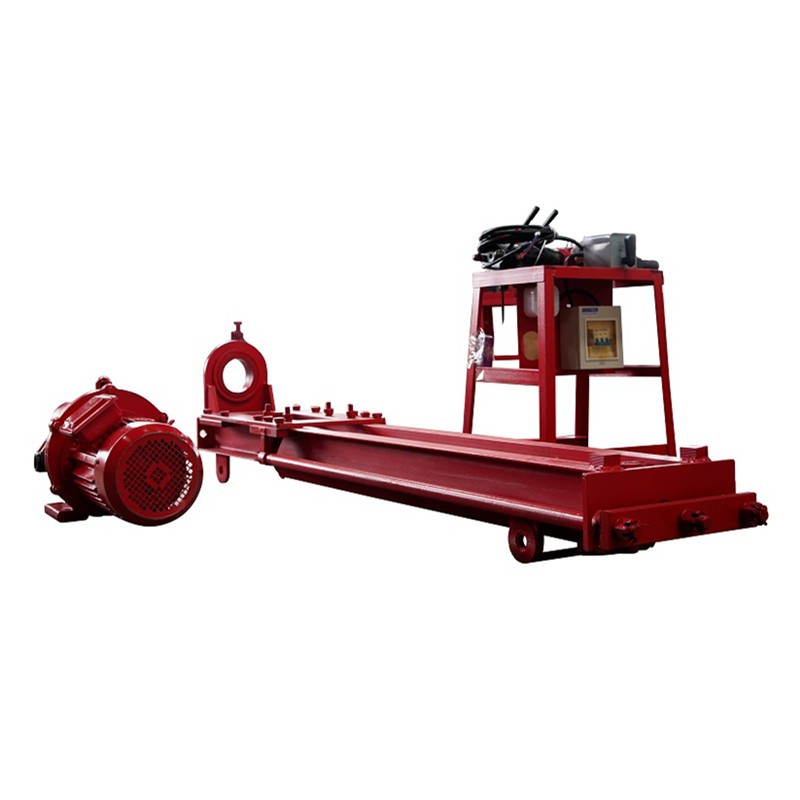
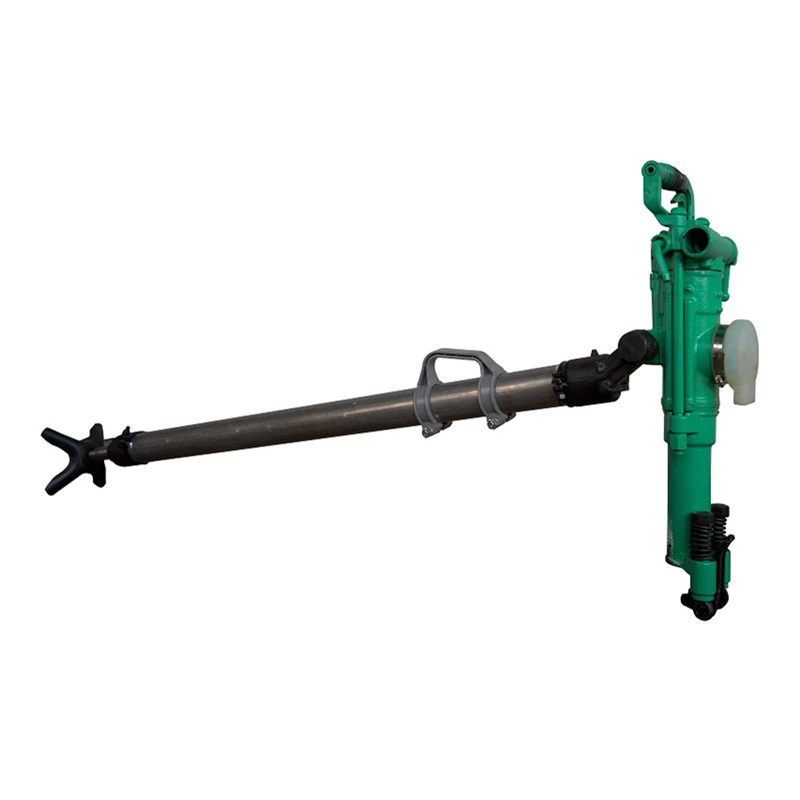
A pneumatic crawler drill is a powerful and versatile piece of equipment widely used in various industries, including mining, construction, and quarrying. As a pneumatic crawler drill supplier, I am excited to share with you the working principle of this remarkable machine.
1. Overview of Pneumatic Crawler Drills
Pneumatic crawler drills are designed to bore holes in different types of rock and soil. They are mounted on crawler tracks, which provide excellent mobility and stability on rough terrains. These drills use compressed air as the power source to drive the drilling mechanism, making them suitable for applications where electricity may not be readily available or where explosive environments require a non - electrical power option.
2. Key Components of a Pneumatic Crawler Drill
2.1 Crawler Tracks
The crawler tracks are the base of the drill. They are made of durable materials and are designed to distribute the weight of the drill evenly. This allows the drill to move smoothly over uneven ground, slopes, and rocky surfaces. The tracks are powered by hydraulic motors, which can be controlled to move the drill forward, backward, and turn in different directions.
2.2 Drill Mast
The drill mast is the vertical structure that holds the drill string and the drilling tools. It can be adjusted in height and angle to reach different drilling positions. The mast is usually equipped with a feed system, which moves the drill string up and down during the drilling process.
2.3 Drill String
The drill string consists of a series of drill rods connected end - to - end. At the end of the drill string, there is a drill bit. The drill bit is the part that actually cuts into the rock or soil. Different types of drill bits are available depending on the type of material being drilled, such as tungsten carbide bits for hard rock and roller cone bits for softer materials.
2.4 Compressor
The compressor is the heart of the pneumatic crawler drill. It compresses air to a high pressure, which is then used to power the drilling mechanism. The compressed air is delivered through hoses to the drill string and the drill bit.
2.5 Control Panel
The control panel allows the operator to control the various functions of the drill, such as the movement of the crawler tracks, the adjustment of the drill mast, and the operation of the compressor. It is usually equipped with gauges, switches, and levers to provide the operator with real - time information and easy control.


3. Working Principle of a Pneumatic Crawler Drill
3.1 Air Compression
The process starts with the compressor. The compressor takes in ambient air and compresses it to a high pressure, typically between 7 - 25 bar (100 - 360 psi). The compressed air is stored in an air reservoir or delivered directly to the drill string through hoses.
3.2 Drill Bit Rotation
The compressed air is directed to a pneumatic motor or a hammer mechanism inside the drill string. In the case of a pneumatic motor, the compressed air causes the motor to rotate, which in turn rotates the drill bit. In a hammer drill, the compressed air drives a piston back and forth, creating a hammering action on the drill bit. This hammering action combined with the rotation of the drill bit helps to break the rock or soil more effectively.
3.3 Feed System Operation
As the drill bit is rotating and hammering, the feed system moves the drill string downwards at a controlled rate. This ensures that the drill bit maintains contact with the rock or soil and continues to cut into it. The feed system is usually powered by hydraulic cylinders, which can be adjusted to control the feed force and speed.
3.4 Chip Removal
During the drilling process, the broken rock or soil chips need to be removed from the borehole. The compressed air plays a crucial role in this process. The air is forced down through the drill string and out through the holes in the drill bit. This high - velocity air flow carries the chips up to the surface, where they are collected or removed.
3.5 Drilling Depth and Angle Control
The operator can control the drilling depth and angle using the control panel. The drill mast can be adjusted in height to reach the desired depth, and the angle of the mast can be changed to drill at different angles. This allows for precise drilling in various applications, such as horizontal drilling for tunneling or angled drilling for slope stabilization.
4. Advantages of Pneumatic Crawler Drills
4.1 Mobility
The crawler tracks provide excellent mobility, allowing the drill to be easily moved to different locations on a job site. This is especially useful in large mining or construction sites where the drill needs to be relocated frequently.
4.2 Power Source Flexibility
Pneumatic crawler drills use compressed air as the power source, which can be generated on - site using a compressor. This makes them suitable for remote locations where electricity may not be available.
4.3 High Drilling Efficiency
The combination of rotation and hammering action of the drill bit, along with the effective chip removal system, results in high drilling efficiency. This reduces the drilling time and increases productivity.
4.4 Adaptability
These drills can be used to drill in a wide range of materials, from soft soil to hard rock. By changing the drill bit and adjusting the operating parameters, the drill can be adapted to different drilling conditions.
5. Applications of Pneumatic Crawler Drills
5.1 Mining
In the mining industry, pneumatic crawler drills are used for exploration drilling, production drilling, and blast hole drilling. They can be used to drill holes for ore extraction, ventilation, and support structures.
5.2 Construction
In construction, these drills are used for foundation drilling, slope stabilization, and tunneling. They can drill holes for piles, anchors, and drainage systems.
5.3 Quarrying
In quarrying operations, pneumatic crawler drills are used to drill blast holes for rock fragmentation. They help to break large rocks into smaller pieces for easier extraction and processing.
6. Related Products
If you are interested in different types of crawler drills, we also offer a variety of related products. You can check out our Crawler Drill Machine Crawler Rig, which is a highly efficient and reliable option for general drilling applications. Our Down The Hole Drilling Rig is specifically designed for deep - hole drilling in hard rock formations. And for borehole drilling, our Crawler Borehole Drill Rig provides accurate and stable performance.
7. Conclusion and Call to Action
In conclusion, pneumatic crawler drills are powerful and versatile machines that play a vital role in many industries. Their unique working principle, combined with their mobility, power source flexibility, and high efficiency, makes them an ideal choice for various drilling applications.
If you are in the market for a pneumatic crawler drill or have any questions about our products, we would be more than happy to assist you. Contact us today to start a discussion about your specific requirements and how our drills can meet your needs. We look forward to working with you and providing you with the best drilling solutions.
References
- "Drilling Engineering Handbook" by John Doe, 2020.
- "Mining Equipment and Technology" by Jane Smith, 2018.
- Industry reports on pneumatic crawler drills from various manufacturers.