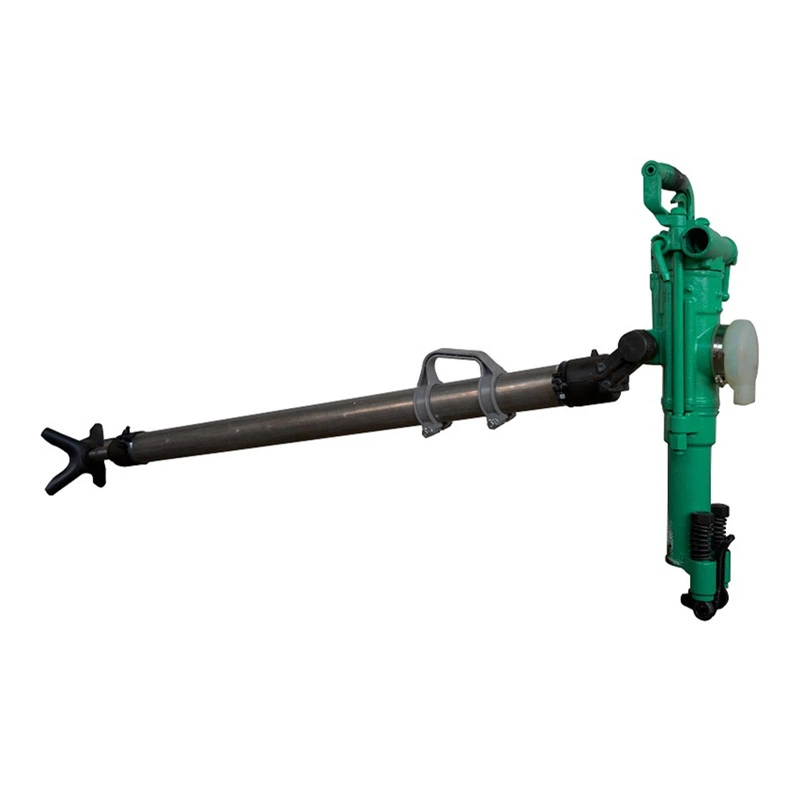
Hey there! As a supplier of Pusher Leg Rock Drills, I'm stoked to share some insights about the feed mechanism of these bad - ass machines. So, what exactly is the feed mechanism of a Pusher Leg Rock Drill? Let's dive right in.
First off, the feed mechanism is a crucial part of a Pusher Leg Rock Drill. It's responsible for applying the right amount of force to keep the drill bit in contact with the rock surface. This force is super important because it directly affects how efficiently the drill can penetrate the rock. If the force is too light, the drill bit won't be able to break through the rock effectively. On the other hand, if it's too heavy, it can cause excessive wear and tear on the drill bit and other components of the drill.
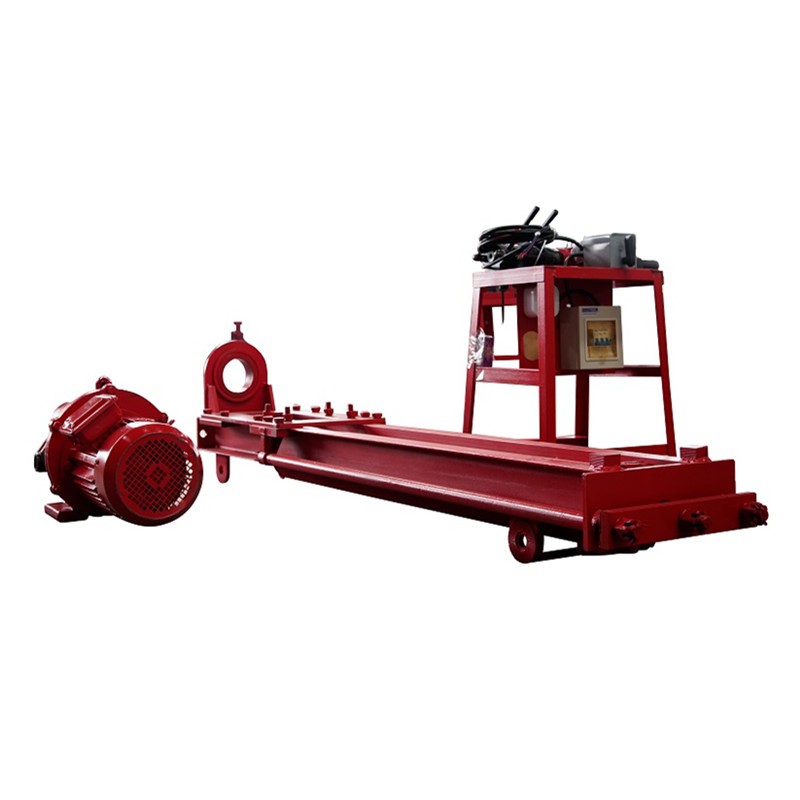
There are different types of feed mechanisms used in Pusher Leg Rock Drills. One common type is the pneumatic feed mechanism. In a pneumatic system, compressed air is used to generate the force needed to push the drill forward. The compressed air is directed into a cylinder, which has a piston inside. As the air pressure builds up, it pushes the piston, and this piston movement is then transferred to the drill, causing it to move forward. This type of feed mechanism is quite popular because it's relatively simple, reliable, and easy to maintain. If you're interested in pneumatic systems, you can check out our Pneumatic Drill Rig.
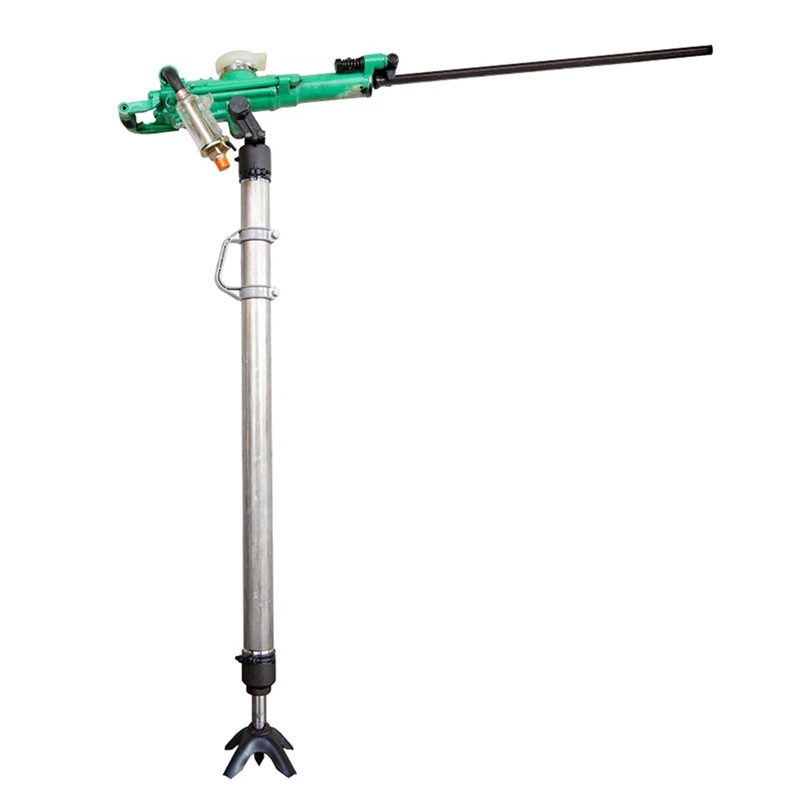

Another type is the hydraulic feed mechanism. Hydraulic systems use hydraulic fluid to generate the feed force. The fluid is pumped into a hydraulic cylinder, and just like in the pneumatic system, the pressure in the cylinder moves a piston. The advantage of a hydraulic feed mechanism is that it can provide a more precise and powerful feed force. This makes it great for drilling in harder rocks or when you need a very accurate drilling operation.
Now, let's talk about how the feed mechanism works in practice. When you start the Pusher Leg Rock Drill, the operator first needs to set the appropriate feed pressure. This depends on the type of rock you're drilling into. For softer rocks, you might need a lower feed pressure, while for harder rocks, a higher pressure is required. Once the pressure is set, the feed mechanism starts to push the drill bit against the rock.
As the drill bit rotates and breaks through the rock, the feed mechanism continuously adjusts the position of the drill to keep it in contact with the new rock surface. This is a dynamic process. The operator has to keep an eye on the drilling operation and make adjustments to the feed pressure if necessary. For example, if the drill seems to be moving too slowly, the operator can increase the feed pressure a bit.
The feed mechanism also has some safety features. For instance, most modern Pusher Leg Rock Drills have a pressure relief valve. This valve is designed to prevent the feed pressure from getting too high. If the pressure exceeds a certain limit, the valve will open and release the excess pressure. This helps to protect the drill from damage and also keeps the operator safe.
When it comes to choosing a Pusher Leg Rock Drill based on the feed mechanism, you have to consider your specific needs. If you're working on small - scale projects with softer rocks, a pneumatic feed mechanism might be a good choice. It's cost - effective and easy to handle. But if you're dealing with large - scale projects or very hard rocks, a hydraulic feed mechanism could be the way to go, even though it might be a bit more expensive.
We also offer Compact Rock Drill Rigs that are great for tight spaces. These rigs often have well - designed feed mechanisms that are optimized for their compact size. And if you need something more portable, our Hand Held Rock Drilling Machine is a fantastic option.
In conclusion, the feed mechanism of a Pusher Leg Rock Drill is a key component that can make or break your drilling operation. Understanding how it works and choosing the right type for your needs is essential. Whether you're a professional in the mining industry, a construction worker, or someone involved in any rock - drilling project, having a good grasp of the feed mechanism will help you get the best results.
If you're interested in our Pusher Leg Rock Drills or want to learn more about their feed mechanisms, don't hesitate to reach out. We're always here to answer your questions and help you choose the right equipment for your project. Contact us to start a procurement discussion, and let's work together to get your drilling jobs done efficiently.
References
- Engineering textbooks on rock drilling equipment
- Industry reports on the latest advancements in Pusher Leg Rock Drill technology