When it comes to rock drilling equipment in the mining, construction, and geotechnical engineering industries, two popular options are the DTH (Down-the-Hole) Pneumatic Rock Drill and the Down-the-Hole Hammer. As a DTH Pneumatic Rock Drill supplier, I often find customers asking about the differences between these two types of machinery. Understanding their distinctions is crucial for making an informed decision when choosing the most suitable equipment for a specific project. In this blog, I'll break down the key differences between DTH Pneumatic Rock Drills and Down-the-Hole Hammers.
Working Principle
The working principle is perhaps the most fundamental point of divergence between DTH Pneumatic Rock Drills and Down-the-Hole Hammers.


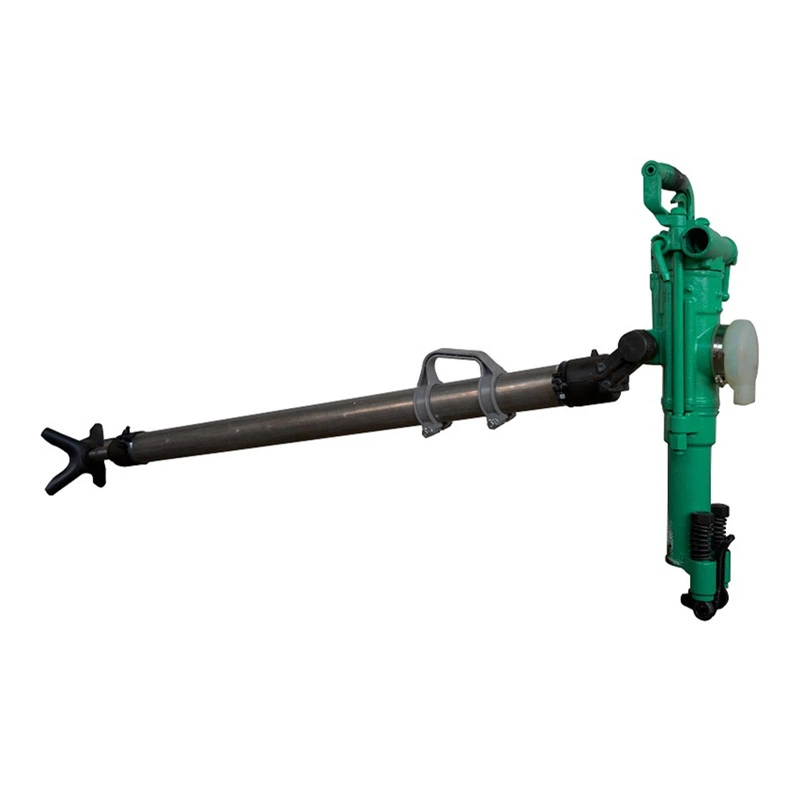
A DTH Pneumatic Rock Drill operates by using compressed air to drive a piston back and forth within the drill body. This reciprocating motion of the piston generates a series of high - frequency impacts on the drill bit, allowing it to break through rock. The air is not only used for the operating power but also for flushing out the rock cuttings from the drilled hole. For instance, if you check out our YT28 Rock Drill, you'll notice that the design is centered around this efficient compressed - air - driven piston mechanism.
On the other hand, a Down - the - Hole Hammer is a specialized drilling tool that is designed to work at the bottom of the borehole. It is a self - contained percussion device that uses compressed air to power a hammer mechanism inside the tool. The hammer strikes the drill bit, which is directly in contact with the rock face at the bottom of the hole. The main advantage of this design is that the energy transfer from the hammer to the drill bit is more direct, as there is less loss of energy through the drill string compared to a traditional DTH Pneumatic Rock Drill.
Drilling Depth and Efficiency
Drilling depth and efficiency are important factors in choosing between these two tools.
DTH Pneumatic Rock Drills are generally well - suited for relatively shallow to medium - depth drilling. They are commonly used in applications where the drilling depth ranges from a few meters up to around 30 - 50 meters. Their efficiency is quite high in this depth range, as they can quickly break through rock with the repeated impacts of the piston on the drill bit. Our Portable Rock Drilling Machine, which is a type of DTH Pneumatic Rock Drill, is very effective for these kinds of shallower - depth projects, offering good mobility and high - speed drilling capabilities.
Down - the - Hole Hammers, however, shine in deeper drilling operations. They can effectively drill holes up to several hundred meters deep. The direct - impact design at the bottom of the borehole allows them to maintain high - energy transfer even at great depths. This means that as the hole gets deeper, a Down - the - Hole Hammer can often drill more efficiently compared to a DTH Pneumatic Rock Drill.
Drill Bit Design and Compatibility
The design and compatibility of drill bits also vary significantly between DTH Pneumatic Rock Drills and Down - the - Hole Hammers.
For DTH Pneumatic Rock Drills, the drill bits are typically designed to be attached to the end of the drill rod that is connected to the drill body. These bits come in various shapes and sizes, depending on the type of rock and the specific drilling requirements. The bit is often designed to withstand the high - frequency impacts from the piston. Different types of bits, such as button bits, chisel bits, etc., can be used with DTH Pneumatic Rock Drills, and they can usually be easily replaced as they wear out.
In Down - the - Hole Hammers, the drill bit is an integral part of the hammer assembly. It is specifically designed to work in conjunction with the internal hammer mechanism. The size and shape of Down - the - Hole Hammer drill bits are also carefully selected based on the drilling conditions, but they are generally larger and more robust than DTH Pneumatic Rock Drill bits, as they need to handle the high - energy direct impacts from the internal hammer.
Mobility and Application Flexibility
Mobility and application flexibility are crucial considerations in the field.
DTH Pneumatic Rock Drills are known for their high mobility. Many of them, like our Underground Rock Drill, are compact and lightweight, which makes them easy to transport and set up in different locations. They are very flexible in terms of applications. They can be used for a variety of tasks, including quarrying, tunneling, foundation drilling, and geotechnical exploration. Their design allows them to be easily adjusted to different drilling angles and positions, making them suitable for both surface and underground operations.
Down - the - Hole Hammers are less mobile compared to DTH Pneumatic Rock Drills. They usually require more complex rigs and set - ups, especially for deep - hole drilling. However, they are highly specialized for large - scale, deep - drilling projects such as large - scale mining operations, oil and gas exploration, and deep - foundation construction.
Cost Considerations
Cost is always a significant factor in any equipment purchase decision.
DTH Pneumatic Rock Drills generally have a lower upfront cost. They are more affordable in terms of the initial investment, which makes them a popular choice for small to medium - sized projects or for companies with budget constraints. Additionally, their maintenance costs are relatively low, as the components are often simpler and easier to access and replace.
Down - the - Hole Hammers, on the other hand, are more expensive both in terms of the initial purchase price and the maintenance costs. The advanced technology and more complex design of these tools contribute to their higher cost. However, in large - scale, deep - drilling projects, the increased efficiency and performance of Down - the - Hole Hammers can potentially result in overall cost savings in the long run.
Conclusion
In summary, both DTH Pneumatic Rock Drills and Down - the - Hole Hammers have their unique advantages and are suited for different types of rock - drilling applications. DTH Pneumatic Rock Drills are more mobile, cost - effective for smaller projects, and better for shallow to medium - depth drilling. Down - the - Hole Hammers, meanwhile, are designed for deep - hole drilling, offer higher energy transfer at depth, and are ideal for large - scale projects.
If you're in the market for rock - drilling equipment and are unsure which option is right for your project, I'd be more than happy to assist you. Our team of experts can provide in - depth advice and guidance based on your specific requirements. Contact us to start a discussion about your rock - drilling needs and explore how our DTH Pneumatic Rock Drills can be the perfect solution for your project.
References
- Smith, J. (2018). Rock Drilling Technology Handbook. Mining Press.
- Johnson, A. (2021). Advances in Drilling Equipment for the Construction Industry. Construction Journal.
- Brown, C. (2020). Geotechnical Drilling: Principles and Practices. Geotechnical Publishing.