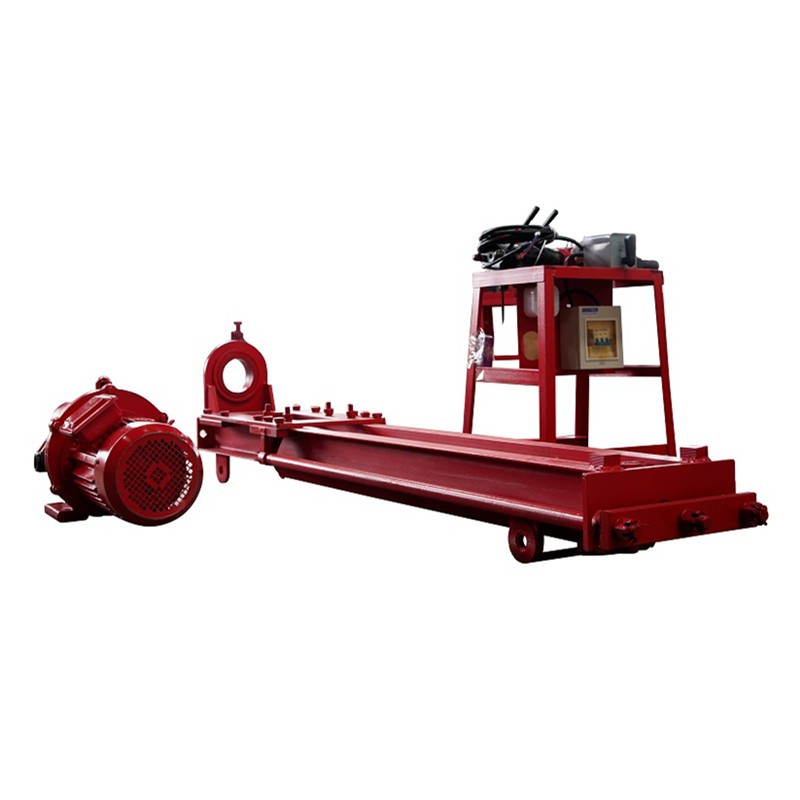
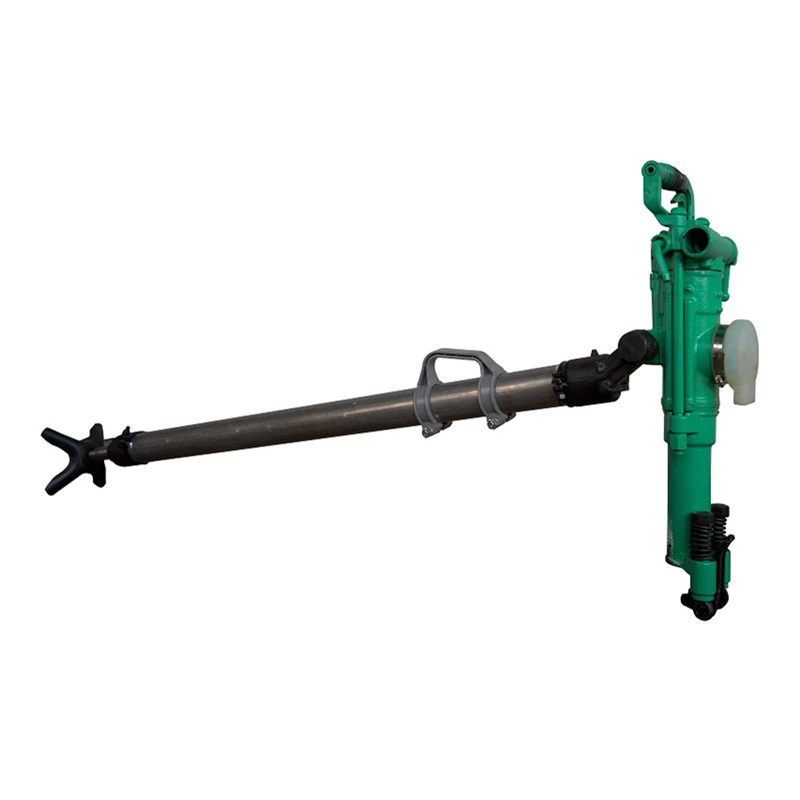
Hey there! As a supplier of crawler rock drills, I often get asked about the differences between crawler rock drills and down-the-hole drills. So, I thought I'd write this blog to break it down for you in a simple and easy-to-understand way.
How They Work
Let's start with how these two types of drills operate. A crawler rock drill is like a tough workhorse. It's mounted on a crawler track, which gives it great stability and mobility on all kinds of rough terrains. The drill bit is attached to a drill rod, and the drill uses a rotation and percussion mechanism to break through the rock. The rotation helps the bit to cut into the rock, while the percussion delivers high-impact blows to shatter the hard material.
On the other hand, a down-the-hole (DTH) drill has a different working principle. The DTH hammer is placed at the bottom of the drill string, right next to the drill bit. Compressed air is sent down through the drill string to the hammer. The air powers the hammer, which then delivers rapid and powerful blows directly to the drill bit. This direct impact on the bit makes the DTH drill super efficient at breaking through hard rock.


Where They're Used
The application areas of these two drills also vary quite a bit. Crawler rock drills are incredibly versatile. They can be used in a wide range of projects, from quarrying and mining to construction and road building. In quarrying, they're used to drill blast holes for extracting stones. In construction, they can be used for foundation drilling and creating holes for building supports. You can check out more about the Drilling Machine Used in Mines on our website.
DTH drills, however, are more specialized. They're mainly used in large-scale mining operations and some heavy-duty quarrying jobs. Because of their high efficiency in hard rock drilling, they're perfect for deep hole drilling in mines. They can quickly drill deep and straight holes, which is crucial for the blasting process in mining. If you're interested in Down Hole Drilling Equipment, our website has more details.
Drilling Depth and Diameter
When it comes to drilling depth and diameter, there are some clear differences. Crawler rock drills can typically drill holes with diameters ranging from a few centimeters to around 20 centimeters. The drilling depth can vary from a few meters to tens of meters, depending on the model and the specific job requirements. They're great for medium-depth and medium-diameter holes.
DTH drills, on the other hand, are designed for deeper and larger-diameter holes. They can drill holes with diameters up to 30 centimeters or more and can reach depths of over 100 meters. This makes them ideal for large-scale mining projects where deep and wide holes are needed for efficient ore extraction.
Mobility and Setup
Mobility is another aspect where these two drills differ. Crawler rock drills, as the name suggests, are mounted on crawler tracks. This gives them excellent mobility on uneven and rough terrains. They can easily move around a job site, climb slopes, and access hard-to-reach areas. The setup time for a crawler rock drill is relatively short, and it can be quickly adjusted for different drilling angles and positions. You can learn more about the Crawler Type Drilling Rig on our site.
DTH drills, however, are usually larger and heavier. They require more space for setup and are less mobile compared to crawler rock drills. Moving a DTH drill from one location to another can be a more time-consuming and complex process. But once they're set up, they can drill continuously and efficiently for long periods.
Cost and Maintenance
Cost is always an important factor when choosing a drill. Crawler rock drills are generally more affordable in terms of initial purchase price. They also have lower operating costs because they use less compressed air and have simpler maintenance requirements. The parts of a crawler rock drill are relatively easy to replace, and the maintenance can be done by a moderately skilled technician.
DTH drills, on the other hand, are more expensive to buy. They also require a large amount of compressed air, which increases the operating cost. The maintenance of DTH drills is more complex and often requires specialized technicians. The DTH hammers and bits are more expensive to replace, but their high efficiency in hard rock drilling can sometimes offset these costs in large-scale projects.
Which One to Choose?
So, how do you decide which drill is right for your project? If you're working on a small to medium-scale project with various terrains and hole requirements, a crawler rock drill might be the better choice. It's versatile, easy to move around, and cost-effective.
If you're involved in large-scale mining or heavy quarrying where deep and large-diameter holes in hard rock are needed, a DTH drill would be more suitable. Despite the higher cost and more complex maintenance, its efficiency in hard rock drilling can save you time and money in the long run.
Let's Talk!
I hope this blog has given you a better understanding of the differences between crawler rock drills and down-the-hole drills. If you're still not sure which drill is right for your project or if you have any questions about our crawler rock drills, feel free to reach out. We're always here to help you make the best decision for your business.
References
- Industry knowledge and experience as a crawler rock drill supplier.
- Technical specifications and research on crawler rock drills and down-the-hole drills.