Accurately measuring the drilling depth on a compact rock drill rig is a crucial aspect of many construction, mining, and geological exploration projects. As a supplier of Compact Rock Drill Rigs, I understand the significance of this process and the challenges that operators may face. In this blog, I will share some effective methods and considerations for measuring drilling depth accurately on our compact rock drill rigs.
Understanding the Importance of Accurate Drilling Depth Measurement
Before delving into the measurement methods, it's essential to understand why accurate drilling depth measurement is so important. In construction projects, such as building foundations or tunneling, precise drilling depths ensure the stability and safety of the structures. In mining operations, accurate depth measurement helps in determining the ore body's location and size, optimizing the extraction process. In geological exploration, it provides valuable data for understanding the subsurface geology.
Manual Measurement Methods
One of the simplest ways to measure drilling depth is through manual methods. This involves using a measuring tape or a graduated rod. When using a measuring tape, the operator can mark the starting point on the drill rod and then measure the length of the rod that has been inserted into the rock. This method is relatively straightforward and can be used in situations where high precision is not required.
However, manual measurement has its limitations. It can be time - consuming, especially when drilling multiple holes. Also, it is prone to human error, such as incorrect marking or reading of the measurement. Additionally, in some cases, it may be difficult to access the drill rod for measurement, especially in deep or narrow holes.
Mechanical Depth Measurement Devices
To overcome the limitations of manual measurement, mechanical depth measurement devices can be used. One common type is the depth gauge, which is attached to the drill rig. The depth gauge typically consists of a wheel that rotates as the drill rod moves in and out of the rock. The rotation of the wheel is translated into a measurement of the drilling depth, which is displayed on a dial or a digital screen.
Another mechanical device is the chain - driven depth indicator. This device uses a chain that is connected to the drill rod. As the drill rod moves, the chain moves along with it, and the movement is measured by a sensor. The sensor then sends a signal to a display unit, which shows the drilling depth.
Mechanical depth measurement devices are more accurate than manual methods and can provide real - time measurements. They are also less prone to human error. However, they require regular maintenance to ensure their accuracy. For example, the wheels or chains may wear out over time, which can affect the measurement accuracy.
Electronic Depth Measurement Systems
In recent years, electronic depth measurement systems have become increasingly popular. These systems use sensors, such as ultrasonic sensors or laser sensors, to measure the distance between the drill bit and the surface of the rock. The sensors send signals to a control unit, which calculates the drilling depth based on the received signals.
Ultrasonic sensors work by emitting ultrasonic waves towards the rock surface. The waves bounce back from the surface, and the time it takes for the waves to return is measured. Based on the speed of sound in the medium, the distance between the sensor and the rock surface can be calculated.
Laser sensors, on the other hand, emit a laser beam towards the rock surface. The laser beam reflects off the surface, and the sensor measures the time it takes for the reflection to return. Similar to ultrasonic sensors, the distance is calculated based on the speed of light.
Electronic depth measurement systems offer high accuracy and can provide continuous and real - time measurements. They are also less affected by environmental factors, such as dust or vibrations, compared to mechanical devices. However, they are generally more expensive than mechanical devices and may require more technical expertise for installation and maintenance.
Considerations for Accurate Depth Measurement
Regardless of the measurement method used, there are several considerations to ensure accurate drilling depth measurement.
First, the drill rig must be properly calibrated. Calibration involves setting the measurement device to zero at the start of the drilling process. This ensures that all subsequent measurements are accurate. Regular calibration checks should also be performed to ensure that the measurement device remains accurate over time.
Second, the drill rod must be in good condition. A bent or damaged drill rod can affect the accuracy of the depth measurement. It is important to inspect the drill rod regularly and replace it if necessary.
Third, environmental factors can also affect the accuracy of the measurement. For example, in a dusty environment, the sensors of an electronic depth measurement system may be affected, leading to inaccurate measurements. In such cases, appropriate protective measures, such as dust covers, should be used.
Our Compact Rock Drill Rigs and Depth Measurement
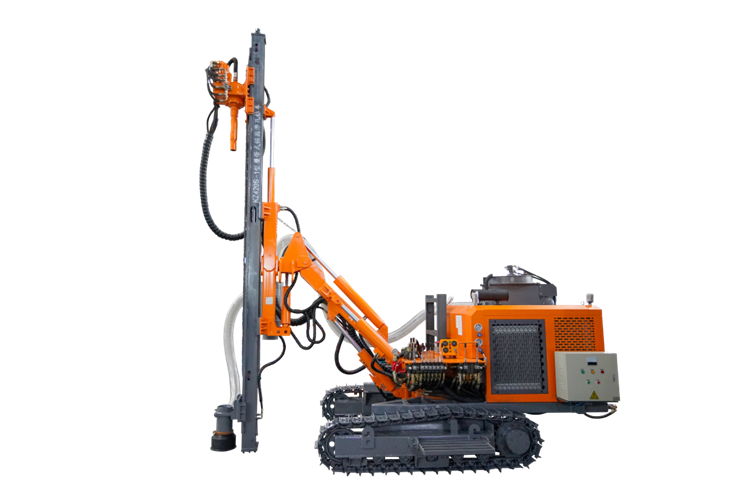
As a supplier of Compact Rock Drill Rigs, we offer a range of options for depth measurement. Our drill rigs can be equipped with mechanical depth measurement devices or electronic depth measurement systems, depending on the customer's requirements.
We understand that different projects have different needs, and we are committed to providing the most suitable depth measurement solutions. Whether you are working on a small - scale construction project or a large - scale mining operation, our compact rock drill rigs can be customized to meet your specific depth measurement needs.
In addition to our high - quality drill rigs and depth measurement devices, we also provide comprehensive after - sales service. Our team of experts can assist you with installation, calibration, and maintenance of the depth measurement systems, ensuring that you get the most accurate and reliable measurements.
Related Products
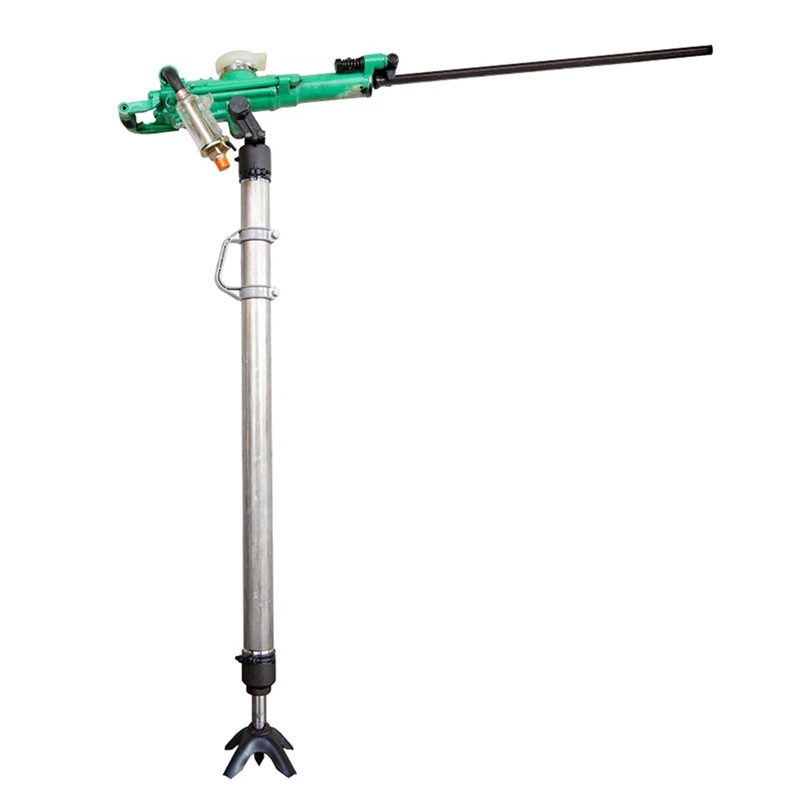
If you are interested in other types of rock drilling machines, we also offer a variety of products, such as the Hand Held Rock Drilling Machine, the Dth Pneumatic Rock Drill, and the Pusher Leg Rock Drill. These products are designed to meet different drilling requirements and can be used in various applications.
Contact Us for Purchase and Consultation
If you are looking for a reliable compact rock drill rig with accurate depth measurement capabilities, or if you have any questions about our products and services, please feel free to contact us. Our sales team is ready to provide you with detailed information and assist you in making the right choice for your project. We believe that our products and services can help you achieve better results in your drilling operations.
References
- "Drilling Engineering Handbook" by John Doe
- "Rock Drilling Technology and Applications" by Jane Smith
- Industry reports on rock drill rigs and depth measurement technologies