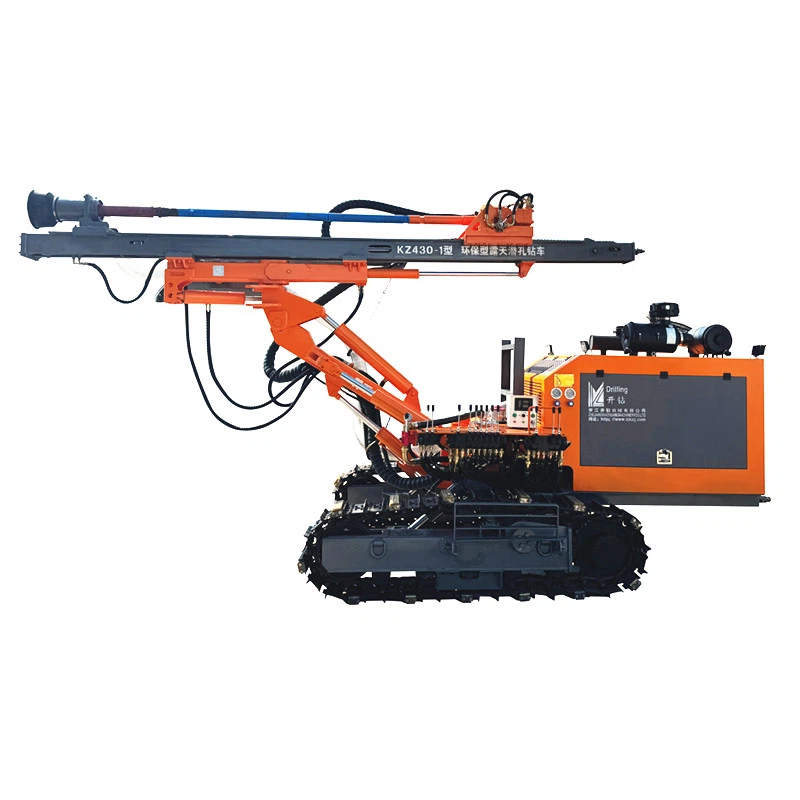
Working Principle
The frame-type electric DTH (Down-The-Hole) drilling rig is a highly efficient drilling equipment that integrates electric drive, hydraulic control, and pneumatic impact. It is widely used in mining and infrastructure construction. Its working principle involves a comprehensive system for converting electrical energy into mechanical energy: an electric motor drives the hydraulic system to generate propulsion and rotational force, while simultaneously powering an air compressor to produce high-pressure air. This high-pressure air travels through the central channel of the drill pipe directly to the down-the-hole hammer at the bottom of the hole, driving its piston to impact the drill bit at a high frequency (exceeding 2,000 impacts per minute), achieving combined impact-rotary rock breaking. Concurrently, the high-speed airflow flushes the rock cuttings out through the annular space between the drill pipe and the hole wall, completing the cuttings removal process
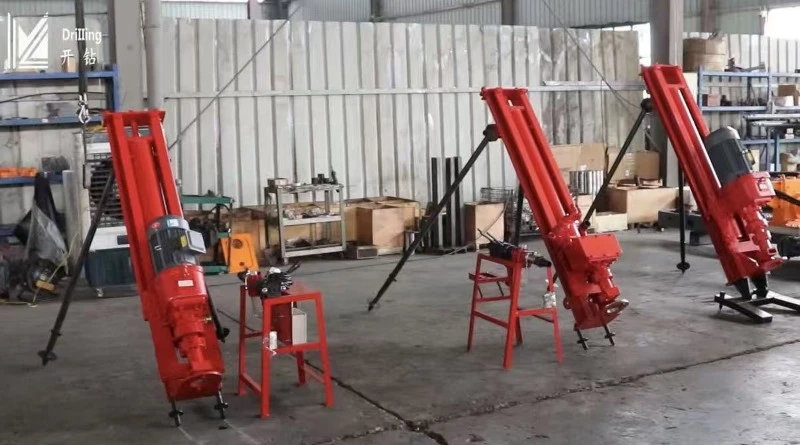
Before this, we need to complete the assembly of the machine. We must fill the oiler cup with oil to ensure lubrication of the hammer during operation. At the bottom of the pneumatic dual valve on the operation panel, there are two air hose connectors. We need to connect these two hoses to the two ports (one at each end) at the bottom of the cylinder to achieve the feed and lift functions. In the air circuit, after passing through the oiler and the ball valve, there is one air hose that needs to be connected to the air inlet of the gearbox in front of the motor. Then, we connect the air hose from the compressor to the operation panel.
Finally, our motor is three-phase. When connecting to our generator, it is necessary to install a voltage stabilizer to maintain stable voltage and prevent motor burnout. At this point, our down-the-hole drilling rig is fully prepared for operation.
Operation and Maintenance Requirements
Before the machine leaves the factory, we have already fully greased the gearbox. After prolonged operation, it is necessary to regularly add grease for lubrication, test the motor's insulation resistance, perform disassembly and cleaning of the impactor, and check the clearance between the piston and cylinder liner (typically required to be ≤0.08 mm). It is also essential to inspect the drill pipes for wear, as extended operation can lead to thinning of the pipe walls, which may cause the pipes to twist and break during work.
Practice has proven that strictly adhering to this maintenance protocol can increase the equipment's overall availability rate to over 92% and reduce unexpected failure rates by approximately 60%.