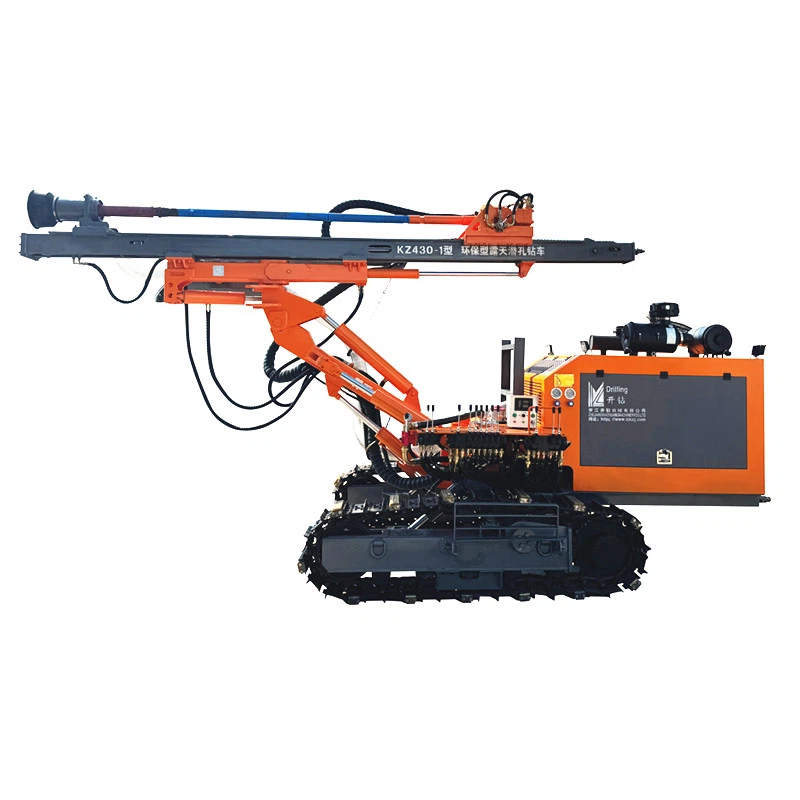
The down-the-hole (DTH) hammer is the "power heart" of the drilling system. Its technical core lies in efficiently converting the energy of high-pressure fluid into impact mechanical energy. Modern hammers commonly employ a valveless self-regulating design, achieving optimized energy transfer through the precise coordination of the piston and cylinder.
I. Core Structural System
Energy Conversion Unit: The piston is manufactured using gradient materials, with a tungsten carbide alloy embedded in its head. Its weight configuration is optimized through dynamic simulation to ensure over 90% energy transfer efficiency.
Air Distribution Control System: Utilizes a ring-shaped air passage design, reducing pressure loss by 40% compared to traditional designs and supporting a wide working pressure range of 0.7–3.5 MPa.
Sealing Assurance System: A three-layer polyurethane sealing structure, combined with specialized lubrication channels, ensures zero leakage under operating conditions of up to 120°C.
II. Working Principle Process
When compressed air at 8–35 bar enters the cylinder, it drives an 8–15 kg piston to accelerate via the differential piston principle:
Return Stroke: The gas pushes the piston upward to a predetermined position (stroke: 80–120 mm).
Energy Storage Stage: The air distribution device switches the air passage, and the piston accelerates downward under the combined action of gravity and air pressure.
Impact Stage: The piston strikes the drill bit shank at a speed of 12–25 m/s, delivering a single impact energy of 300–1,500 joules.
Exhaust and Cuttings Removal: The reflected wave generated at the moment of impact drives rock cuttings out of the hole through the drill bit's air channels.
III. Hammer Maintenance and Repair
DTH hammers are often categorized into low-pressure, medium-pressure, and high-pressure types to meet various job site requirements and align with air compressor capacity needs. Correspondingly, the interchangeability of internal parts and maintenance procedures are largely similar.
Low- and medium-pressure hammers contain many plastic components, such as sealing rings. After prolonged operation, these seals may shift or become deformed or damaged under high airflow from larger compressors. It is essential to regularly disassemble and inspect these wear-prone parts for replacement or adjustment.
High-pressure hammers, on the other hand, feature internal metal components. To prevent dry friction between these parts, regular oil lubrication maintenance is necessary to extend service life and reduce maintenance costs. Low-pressure hammers can be lubricated via an oil mist generator integrated into the machine, which delivers oil mist through the airflow.